
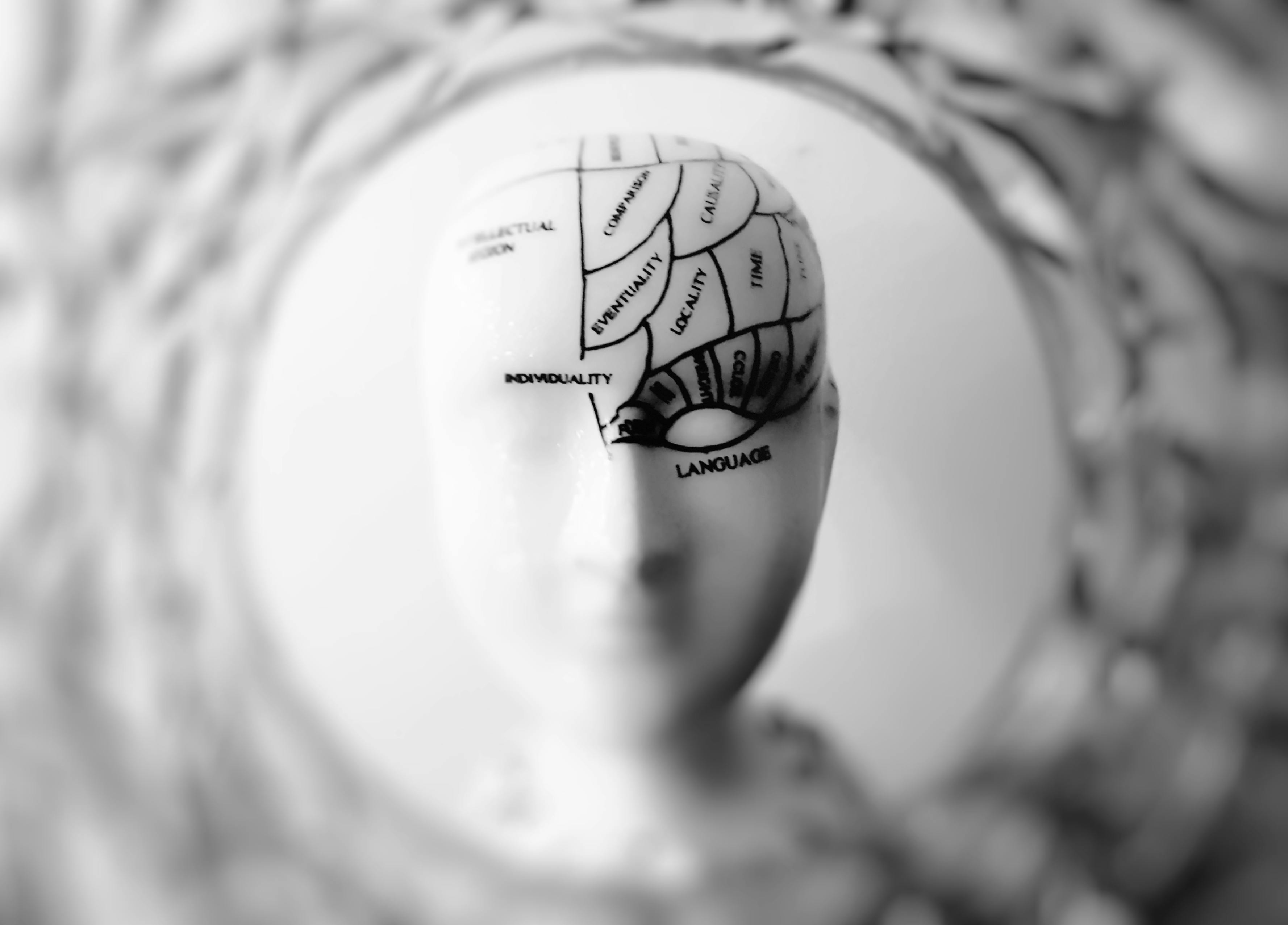

I’m calling this a stupid thought experiment not because it’s trivial, but because it starts from an almost offensively simple model of reality. The kind of model that collapses the moment you try to map it onto the real world. Still, there is value in pushing a broken idea to its logical end and seeing exactly where and why it fails.
Imagine the universe as a closed system. Inside it exists an actor that observes its environment, processes information, builds internal models, updates beliefs, and maybe even corrects itself when those models turn out to be wrong. It learns continuously. It gets better, sharper, more accurate over time. But there is a catch: this actor has no limbs, no outputs, no way to act back on the environment it observes. It only consumes information.
Think of it as a bubble of computation. Immense inference. Zero action. An intelligence that knows, but never does.
This is deliberately more extreme than any real robot or AI agent. Real agents act. This one doesn’t. And that extremity is the point.
The question this setup forces is simple and uncomfortable: does the accumulation of information alone justify the existence of such an actor? Or is existence only justified when an entity has causal effects on the world it inhabits?
In this model, the actor learns, but the environment remains unchanged. There is no feedback loop from actor to world. From the universe’s point of view, entropy does not change because of the actor. No state transition depends on it. The universe evolves exactly as it would if the actor were not there.
That leads to a harsh conclusion. If something has no causal impact, the universe has no reason to register its existence at all. Not because it is bad or useless, but because it is irrelevant. Knowledge without consequence does not show up in the physics of the system.
This is where information starts to collapse as a justification. If information does not propagate, then knowing is not doing, understanding is not difference, and intelligence is not relevance. In a world where all information already exists, nothing new is created by learning, and sharing information changes nothing, learning becomes redundant. Knowledge without consequence becomes indistinguishable from non-existence.
At this point the model runs into an obvious problem. In the real world, information propagation is itself a causal effect. Ideas spread. Beliefs alter behavior. Knowledge reshapes outcomes. So to keep the thought experiment internally clean, something drastic has to be done: human consciousness has to be stripped out of the picture.
Consciousness, ego, meaning, and communication all have to go. Once they are removed, humans collapse into just another arrangement of matter processing data. No special status. No intrinsic justification. Just physics following rules. This move feels disturbing, but it is consistent with the premises of the model.
Once everything conscious is flattened, asymmetry disappears. No one knows more than anyone else. Information does not grow. Sharing becomes pointless. Distinction erodes. The world turns flat.
This is why the model starts to feel strangely Marx-like, not in a political sense but in a structural one. A world without differentiation, scarcity, or leverage derived from knowledge. When differentiation disappears, value follows.
If all the constraints of the model are accepted, the conclusion is brutal but clean. Without consciousness, ego, or causal influence, everything is equally justified, and therefore nothing is meaningfully justified. Justification itself dissolves.
Reasons require preference. Preference requires perspective. Perspective requires consequence. Remove consequence, and the question “why exist?” stops making sense.
What this thought experiment actually shows is not that intelligence is meaningless. It shows something narrower and sharper. Existence gains meaning only through causality. Not through knowledge alone. Not through intelligence alone. But through making a difference in the state of the world.